
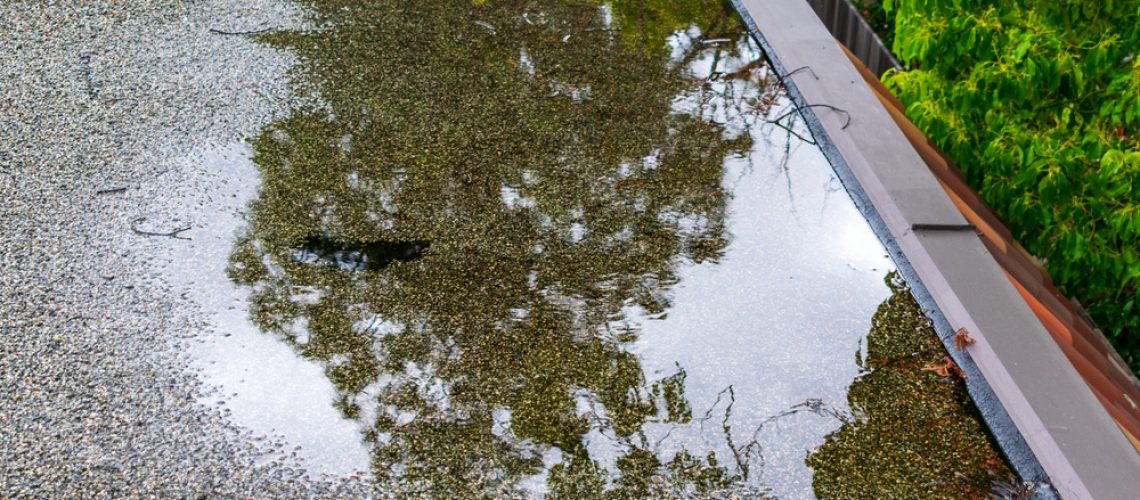

Most adequately designed commercial roofs, including flat roofs, have an adequate slope to drain water after a torrential downpour or snow event. Because evaporation is also effective at helping to dry up roofs, your roof should be completely dry a few hours after rainfall.
If you discover that some amount of water remains on your commercial roof after 48 hours of a downpour, you have got what’s known as ponding water. You need to contact your KSI expert commercial roof contractor to mitigate the potentially damaging effects ponding water can cause. The following are the risks that you should be aware of once you notice ponding water on your roof.
- Break Down Roof Coating
Ponding water exposes commercial roofs to moisture for extended periods of time. Roof coatings are most effective in dry conditions. Therefore, prolonged exposure to ponding has the potential of negatively affecting the stability of the coating. When UV rays heat the ponding water, the coatings begin to break down, and this may make your roof lose its aesthetic appeal as well as it’s protection capabilities entirely over time.
- Destroyed Roof Membranes
As the ponding water sits on the roof, the water is forced into the roof membrane. During the day, the sun acts as a magnifying glass, causing heat damage as well as creating an ideal environment for algae and insects to develop. In the cold, ice can form and cause punctures that in turn allow water to leak into the insulation and eventually the understructure. This repetitive cycle of transformations that extreme temperature variations cause makes the membrane susceptible to breakdown and leaks.
Polymeric and asphalt commercial roofing materials degrade much faster when exposed to the cycles of rainfall and sunlight.
- Cause Depression on the Roof
Ponding water does not only deteriorate the roofs’ membrane but it also adds weight to it. The extra weight can cause a depression in the roof’s structure, where an increasing amount of water can pool. In the event of prolonged heavy rain, the depression can grow within a short time and cause a severe structural problem.
- Supports Vegetation Growth
Living organisms such as algae, weeds, and waterborne insects need water to thrive. Ponding water ensures that they have a constant supply. However, with time, the vegetation and other debris can clog the drains, which in turn causes more ponding water and probable leaks to occur.
- Causes Leaks and Collapse
As moisture enters the roof system’s weak points, the building’s interior can quickly begin to give way to leaks. What’s worse is what started out as small damage can lead to the entire understructure becoming severely damaged. This could cause the roof to partially collapse.
Conclusion
To prevent costly damage, you should consult an expert commercial roofing contractor as soon as you notice signs of water ponding. KSI’s qualified professionals can help you remedy to small issues before they become giant issues. Call your Dallas commercial roof repair experts at KSI today, we’re happy to help.